
2026-04-14
Definition of stainless steel
Stainless steel is a general name for stainless and acid-resistant steels.
Stainless steel: A steel that does not corrode in mildly corrosive environments such as the atmosphere and fresh water.
Acid resistant steel: Steel that resists corrosion in aggressive corrosive environments such as acids, alkalis, salts and sea water.
Stainless steel classification
The grades, chemical composition and properties of stainless steel are varied. The most common classification methods are based mainly on the basic chemical composition, microstructure of the steel, and a combination of both.
1.Classification by main chemical composition
The most common is the division of stainless steel according to chemical elements into two main groups: chromium and chromium-nickel stainless steels.
(1).Chrome
If the main alloying element in a steel other than iron is chromium, the stainless steel is called chromium stainless steel.
(2).Chromium-nickel
If the main alloying elements in steel, in addition to iron, are chromium and nickel, such stainless steel is called chromium-nickel stainless steel.
2.Classification according to steel microstructure
The microstructure of steel refers to the characteristics of the crystalline structure and microstructure of steel. Based on their microstructure, stainless steels are mainly divided into five categories: ferritic, austenitic, martensitic, duplex (two-phase) and precipitation-hardening stainless steels.
(1).Ferritic stainless steel
Ferritic stainless steel is a steel with a body-centered cubic crystal lattice, carbon content ≤ 0.20%, chromium content in the range of 10.5%–32%, maintaining a ferritic structure at both high and room temperatures. This type of stainless steel is not hardened by heat treatment.
Depending on the chromium content, ferritic stainless steels are divided into low chromium (chromium content 10.5%–15.0%), medium chromium (chromium content 16%–22%) and high chromium (chromium content 23%–32%). Ferritic stainless steel is one of three main classes of stainless steels, which appeared almost simultaneously with martensitic and austenitic steels at the beginning of the 20th century. In terms of production volume, ferritic stainless steel is second only to chromium-nickel austenitic steels: in the global production of stainless steel, the share of ferritic steel is usually about 30%. Ferritic stainless steel is characterized by high production volumes, a wide range of applications and excellent all-round properties in thin sections. Since such steels do not contain nickel or only certain grades contain a small amount of it, their cost and price are relatively low, which makes them the most important class of stainless steels sparingly alloyed with nickel.
Until the 1950s and 1960s, traditional ferritic stainless steels, smelted in electric arc furnaces without secondary refining, had normal levels of carbon and nitrogen, the further reduction of which was extremely difficult. Since the 1960s, technological advances in stainless steel production and the use of secondary refining processes such as AOD and VOD have led to the development of modern low and ultra-low carbon and nitrogen content ferritic stainless steels, which have largely overcome and successfully addressed a number of the disadvantages of traditional ferritic steels. Their production has increased, and their scope is constantly expanding.
(2).Austenitic stainless steel
Austenitic stainless steel retains its austenitic structure at both high and room temperatures without undergoing structural transformations. Therefore, austenitic stainless steel also refers to steels that cannot be strengthened by heat treatment. However, due to its tendency to strain hardening (hardening), its strength can be increased by cold plastic deformation. The low strength of such steels in the quenched state was once considered one of the main disadvantages of austenitic stainless steels.
To address the problem of intergranular corrosion in the sensitized state and improve corrosion resistance, ultra-low carbon austenitic stainless steels have been developed, typically having a carbon content of ≤ 0.03%. As corrosion resistance increases, the strength of such steel decreases slightly. Since the 1970s, austenitic stainless steels have been available with controlled nitrogen content (residual nitrogen content in the steel within standard limits, e.g. [N] ≤ 0.10% or [N] ≤ 0.12%) or nitrogen alloyed (maximum amount of nitrogen that can be introduced into the steel at atmospheric pressure, e.g. ≤ 0.40% or ≤ 0.40%) 0.50%), which makes it possible to achieve sufficiently high strength due to solid solution strengthening with nitrogen. And high-nitrogen austenitic stainless steels produced by high-pressure nitrogen injection (the amount of nitrogen introduced under pressure, i.e. [N] > 0.4% or ≥ 0.5%) have extremely high strength and excellent fracture toughness. The combination of nitrogen solid solution strengthening and strain hardening has allowed some austenitic stainless steels to enter the category of high-strength stainless steels.
Chromium-nickel austenitic stainless steel, among the existing five main classes of stainless steels, has the best complex properties, has the largest number of grades, has the most complete range and specification, the widest scope, develops at the fastest pace, is produced in the largest volumes and covers the widest sphere of consumption. Globally and in major stainless steel producing countries, the share of chromium-nickel austenitic stainless steel typically accounts for more than 50%–60% of total stainless steel production.
Since nickel is a scarce and expensive element, its shortage is especially acute in wartime. Introduced in the 1940s, standard chromium-manganese austenitic stainless steels replacing nickel with manganese and nitrogen (American AISI 200 series), despite a long development period, have a narrow scope and low production volume; in the United States, their annual production is only a few percent of total stainless steel production. In recent years, the emergence of high-nitrogen high-strength and ultra-high-strength chromium-manganese austenitic stainless steels, as well as progress in the research of high-nitrogen-free manganese.
(3) Martensitic stainless steel
Martensitic stainless steel is a class of stainless steels whose properties can be controlled by heat treatment (quenching, tempering). Based on their chemical composition, they are divided into martensitic chromium and martensitic chromium-nickel stainless steels.
Martensitic chromium stainless steels are mainly of three types: low carbon ([C] ≤ 0.15%), medium carbon ([C] 0.16%–0.40%), and high carbon ([C] > 0.40%). Carbon is an essential and important alloying element in martensitic chromium stainless steels.
Martensitic chromium stainless steels primarily include traditional steels such as 1Cr13, 2Cr13, 3Cr13, 4Cr13. The chromium content in them is at least 11.5% and reaches 18%, which gives these steels stainless properties and corrosion resistance in weak environments. The carbon content varies with the chromium content, typically between 0.10% and 1.0%, to provide an austenitic structure at high temperature and a martensitic structure at room temperature after quenching. Due to the formation of lamellar high-carbon martensite and the precipitation of carbides, these steels acquire high strength and high hardness. The subsequent tempering after quenching relieves quenching stresses and forms a homogeneous, stable structure, giving the steel a certain ductility, toughness and good corrosion resistance - a set of properties. Since martensitic chromium stainless steels are inferior to all other classes of stainless steels in terms of corrosion resistance, and also have low ductility and toughness, poor weldability or cannot be welded at all, their widespread use is limited.
Martensitic chromium-nickel stainless steels were developed to overcome some of the disadvantages of traditional martensitic steels. At an early stage, the famous steel 1Cr17Ni2 was created by replacing carbon with nickel. Although its toughness has increased compared to martensitic chromium steels and its corrosion resistance has improved, it is still not suitable for welding.
Modern (super) martensitic stainless steels, developed since the 1960s, by further replacing carbon with nickel, achieving ultra-low carbon content and introducing 2%–6% Ni, retain an austenitic structure at high temperatures, and after quenching and tempering at room temperature, acquire a composite structure consisting of low-carbon or ultra-low-carbon lath martensite, reverted austenite and a small amount of ferrite. Additional alloying with molybdenum, copper and other strengthening elements allows these steels to retain the high strength of martensitic chromium steels while maintaining good toughness and weldability. At the same chromium content, the corrosion resistance of modern martensitic steels significantly exceeds the corrosion resistance of traditional martensitic chromium steels. However, due to the low carbon content, modern martensitic steels lose the characteristics of high hardness, wear resistance and high edge sharpness inherent in martensitic chromium steels.
(4).Double phase stainless steel
Almost a hundred years have passed since the discovery that the presence of small amounts of ferrite in austenitic chromium-nickel stainless steel improved resistance to intergranular corrosion, which led to the emergence of austenitic-ferritic (α+γ) chromium-nickel dual-phase steels and ultimately to the formation of a class of dual-phase steels officially recognized along with the three main classes of stainless steels mentioned above.
Since the nickel content of widely used α+γ nickel-chromium dual-phase steels is generally 5%–7%, which is only about half of the nickel content of widely used nickel-chromium austenitic steels, and the newly developed economical dual-phase steels contain only 1%–4% Ni, α+γ dual-phase steels are also an important class of nickel-sparingly alloyed stainless steels.
The development of two-phase α+γ chromium-nickel stainless steels has gone through approximately three important stages. Depending on the characteristic alloying elements, the value of PRE (pitting corrosion resistance equivalent), changes in the ratio of α- and γ-phases, the period of appearance and characteristics of properties, two-phase stainless steels are usually divided into steels of the first, second and third generations. Based on the characteristic elements in their composition, they can be divided into low-alloy, medium-alloy and high-alloy dual-phase steels.
Due to difficulties in controlling the ratio of the two phases, limited hot workability, weldability, and economic factors, the production volume of first-generation dual-phase steels was low. However, the advent of modern dual-phase stainless steels has largely overcome the disadvantages and limitations of the first generation steels, allowing them to expand their range of applications, and they are now a class of steel with enormous development potential in the engineering field.
Grades developed before 1971 belong to the first generation of dual-phase stainless steels, including the very first dual-phase steel 1Cr25Ni5Mo1.5, which appeared in the 1930s. The nitrogen content in first generation steels was at the usual level characteristic of smelting in electric arc furnaces. Although the first-generation dual-phase steels had already fully demonstrated their characteristic properties, due to the relatively low PRE value and significant differences in the phase ratio in the quenched state among different grades, which were also difficult to control accurately, the excellent properties of dual-phase steels in the welded joint zone were significantly deteriorated or even completely lost, which seriously hampered the application and development of dual-phase steels in welded structures.
The grades that appeared between 1971 and 1989 belong to the second generation of two-phase stainless steels and are characterized by a mandatory nitrogen content. Since nitrogen is an element that actively forms and stabilizes austenite, with an increase in its content in steel, on the one hand, the proportion of the austenite phase in the base metal increases and the stability of austenite at high temperatures increases, which leads to a decrease in the amount of material turning into ferrite at the same temperature. On the other hand, the high diffusion rate of nitrogen during cooling from high temperatures promotes the rapid transformation of ferrite into secondary austenite, which prevents the formation of a single-phase ferrite structure at the fusion line and in the heat-affected zone after welding. The introduction of nitrogen created the conditions for the emergence and development of two-phase steels of the second and subsequent generations. Since nitrogen in stainless steel is mainly dissolved in austenite, the beneficial effect of nitrogen on dual-phase stainless steels is actually a reflection of the effect of nitrogen on the structure and properties of the austenite phase in dual-phase steels.
The grades introduced after 1990 belong to the third generation of dual-phase stainless steels and are characterized by a further increase in the content of molybdenum and nitrogen, due to which the PRE value of such steels is ≥ 40% and the corrosion resistance, especially resistance to pitting and crevice corrosion, is further improved. These days they are also called super-dual-phase stainless steels.
Since the early 2000s, the development of two-phase stainless steels has been going in two directions. On the one hand, the content of alloying elements continues to increase to achieve even higher strength and excellent corrosion resistance, such as SAF 2707 and SAF 3207 steels developed by the Swedish company Sandvik, with a PRE value of > 45%, called hyper-two-phase stainless steels. On the other hand, there is a trend towards the development of economical dual-phase steels with low nickel content and no or little molybdenum in order to reduce the cost and price of dual-phase steels, as well as significantly improve their hot workability and weldability, thereby increasing their competitiveness compared to other types of stainless steels.
(5).Dispersion-hardening stainless steel
Dispersion-hardening stainless steel is a class of stainless steels whose matrix structure at room temperature can be martensitic, austenitic or ferritic and which are strengthened by the precipitation (aging) of intermetallic compounds, as well as carbides, nitrides and other phases on the matrix as a result of appropriate heat treatment.
At present, the widely used precipitation-hardening stainless steels are mainly divided into three types: martensitic precipitation-hardening stainless steels, semi-austenitic precipitation-hardening stainless steels and austenitic precipitation-hardening stainless steels. In addition, they often include ultra-low-carbon maraging stainless steels.
Although the principle of precipitation hardening of stainless steel was known back in the 1930s, after the introduction of the first grade of precipitation-hardening stainless steel, Stainless W, it did not find practical application until 1946. Subsequently, due to the needs of the aviation, aerospace, nuclear and chemical industries for steels that combine corrosion resistance with a high strength-to-weight ratio, new precipitation-hardening stainless steels began to emerge. In the United States, such steels were classified as the 600 series. Ultra-low-carbon maraging stainless steels appeared in the 1960s. They were developed from maraging steels by adding chromium to impart stainless properties. Typically they are also classified as martensitic precipitation-hardening stainless steels.
Martensitic dispersion-hardening stainless steel has an unstable austenitic structure, which, after solid solution treatment, undergoes a martensitic transformation. Subsequent aging leads to the precipitation of a second phase on the martensitic matrix, which strengthens the steel.
Ultra-low carbon maraging stainless steel has stainless properties; after solid solution treatment and aging in it, a second phase precipitates on a matrix of ultra-low-carbon, high-nickel martensite, which strengthens the steel.
Semi-austenitic precipitation-hardening stainless steel is also a steel with unstable austenite, but its austenite is more stable than that of martensitic precipitation-hardening steels. In the hardened state at room temperature, semi-austenitic dispersion-hardening steel has an austenitic structure. After cold plastic deformation, low-temperature treatment, or heating to approximately 750°C for adjustment treatment, austenite can be transformed into martensite, after which, through subsequent aging, a second phase is formed on the martensitic matrix, strengthening the steel.
Austenitic precipitation-hardening stainless steel has a stable austenitic structure. After solid solution treatment and subsequent aging, a second phase is released from the austenitic matrix, which strengthens the steel.
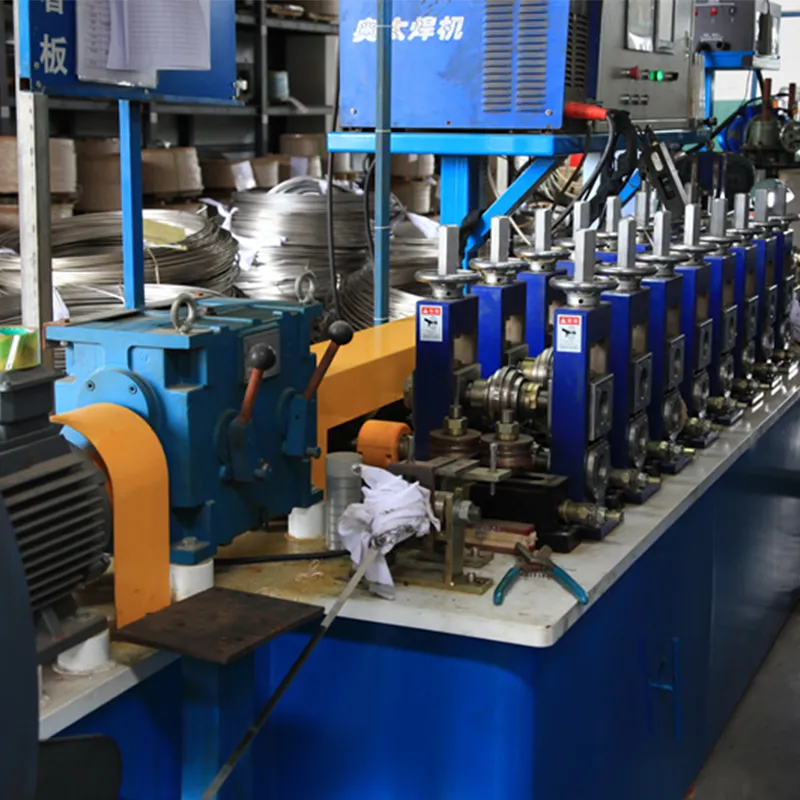
Shanghai Xinliang Stainless Pipe Industry Co., Ltd. is positioned as an expert in processing high-precision pipe components, providing customers with complete solutions from design to delivery. The company specializes in the production, processing and sales of medium and high-end precision, ultra-small, thin-walled stainless capillary pipes and components.
We use high-quality stainless raw materials and strictly control the chemical composition, guaranteeing excellent corrosion resistance and mechanical properties of the products.
Commonly used materials include, but are not limited to: